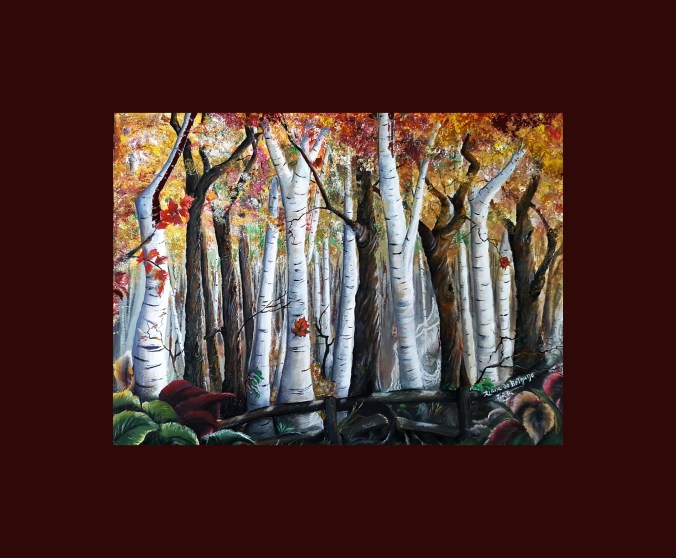
The best advice that I could give anyone who does commission work is to listen to what your client’s vision is. When someone approaches you do create a piece of artwork for them, they usually have a “vision.”
Some will only have a vague idea, and say something like, “I give you the artistic freedom to just create,” while others will know exactly what they want, right down to color preferences. The best thing you can do in both cases is to listen very closely. Ask questions:
- Agree on a size for this painting, and the price. If you don’t know your client well, it’s probably a good idea to collect a deposit up front to at least cover the costs of your materials, with the balance to be paid before you ship it off or hand it over to them. There’s no need for you to feel squeamish about this. You’re running a business and there’s no reason that you shouldn’t handle these very basic things before you put weeks or months into a painting that they may decide not to purchase, after all. That does happen now and then, believe me.
- Ask them to provide pictures to give you an idea of what they see in their minds. The point is NOT to copy anyone else’s work, but just to get some kind of idea where your client is coming from.
- Ask them to pick up some paint swatches so you can get a visual of the colors they love, and be able to match up your paint mixes to them. If you’re working from a distance, get them to pick up the paint swatches and get the brand and number/codes for those swatches, and email them to you, so that you can go pick them up yourself at a paint store.
- If you’re about to paint an image for a particular room, ask them for color swatches of their decor if they can give you that, so that you can match it up with their color scheme, if that is what they want.
- Ask them if they prefer “realism” or “impressionism,” and things like that. If you don’t know what those mean, just google it. Get to know your craft. It really matters to your client that you can “see” what they see in their visions.
- Create your painting with acrylics first. If they want an oil painting, you can go over the whole thing later with oils. The reason for this is that acrylics dry really fast, and you can paint right over any area they want changed–usually without any texture showing through. (TIP: Oils can take about a month to dry, and very often leave texture. The thicker the paint, the higher the texture. Oils blend MUCH better than acrylics, but that’s another topic for another time.)
- Get an email address so that you can send them pictures of the near-finished product. If they want changes, DO THEM, and then send pics.
- Keep making the requested changes until they are 100% happy with what you’ve done. That’s what I did with the above painting, and when I finished it, according to my client’s preferences and wishes, I have to admit that I like it so much that I want one for myself. I won’t make one because I don’t even copy my own work. It wouldn’t be fair to her since I promised an original–a one-of-a-kind. She loved the final painting so much that she went out and bought a new rug to match the painting better, and said she felt like sleeping in her living room these days so that she could just sit and admire it. That made all the work SO worth it! What’s more, she ultimately paid me more than the agreed-upon amount because she was so happy with it.
- When you’re both satisfied that this is what they want, then you can proceed with going over the whole thing with oil paints, if it is oils that they want. If they are happy with acrylics, then take a high-definition picture of your work for your records.
- Go ahead and turn it over to your client, and collect the balance of your fee.
 ZdB Originals